If there's one word that gets thrown around in puppy raising more than any other, it's "socialization." And if there's one word that gets misunderstood more than any other, it's also socialization.
A lot of people picture it as a checklist of dog parks and puppy playdates — get your puppy around as many other dogs as possible and call it a day. But real socialization is both gentler and bigger than that, and getting it right in these first few months is genuinely one of the most important things you'll ever do for your dog.
⸻
What does "socializing a puppy" actually mean?
Socializing your puppy means giving them positive, low-stress experiences with the everyday world while their brain is still wired to accept new things as normal. That includes other dogs and people, yes, but it also includes sounds, surfaces, objects, handling, and environments.
The goal isn't to exhaust your puppy with constant excitement. The goal is to help them learn, deep down, that the world is a safe and predictable place. A well-socialized puppy grows into a dog who can handle a thunderstorm, a vet exam, a crying baby, a skateboard, and a houseful of guests without falling apart. That's the whole prize.
⸻
When is the puppy socialization window?
The critical socialization window runs from roughly 3 to 14 weeks of age, beginning to close around 14 to 16 weeks. During this period, your puppy's brain is unusually open to forming positive associations. Experiences they have now shape how they'll feel about similar things for the rest of their life.
This is why waiting until your puppy is "older" or fully vaccinated is such a costly mistake. By 16 weeks, that openness is already fading, and anything unfamiliar starts to feel a little more suspicious. The window doesn't reopen.
⸻
How do I socialize my puppy before they're fully vaccinated?
Carefully, and absolutely without skipping it. The key is choosing controlled, lower-risk environments instead of high-traffic public dog spots.
That means avoiding places like dog parks, busy pet store floors, and rest stops where lots of unknown dogs of unknown health have been. Instead, you lean on safer options: a well-run puppy class that requires vaccinations and health checks, playdates with a friend's known, vaccinated, dog-friendly dog, carrying your puppy through new environments so they can watch the world from your arms, and bringing the world to them with novel sounds, surfaces, and objects at home.
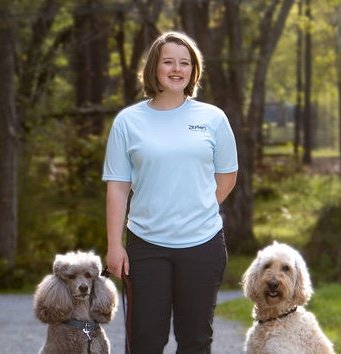
This balance is exactly what good puppy classes are built around. My Puppy Preschool runs in a private fenced backyard with a small group of five puppies max, all required to be healthy and started on their vaccines, so socialization happens in a clean, supervised space rather than a public free-for-all.
⸻
Where can I socialize my puppy in Tallahassee?
You have more options than you might think, and the best ones don't involve a dog park at all.
A structured puppy class is the gold standard, because it offers safe puppy play plus exposure to new people and handling, all supervised. Beyond that, quiet outdoor spaces where you can observe the world from a distance are wonderful: a bench outside a shopping center where your puppy can watch carts and people go by, a friend's fenced backyard, or a calm corner of a park where you sit and let the sights and sounds happen at a comfortable distance. Many dog-friendly businesses around town — patios, breweries, and certain stores — also make great low-key field trips once your puppy is a little further along.
If you want specific spots, I keep separate guides to the best puppy-friendly parks and dog-friendly patios and businesses in Tallahassee on the blog. For now, just remember the principle: calm observation beats overwhelming immersion every single time.
⸻
What does Fear Free socialization look like?
Here's the part that gets missed most often: more exposure is not always better. Flooding a nervous puppy with too much, too fast can backfire and actually create the fear you were trying to prevent.
Fear free socialization means we watch the puppy, not the checklist. We pair new experiences with good things like treats and praise, we keep sessions short and positive, and we always let the puppy choose how close they want to get. A puppy who hangs back and watches a new person from six feet away is still socializing beautifully. Pressuring that same puppy to be picked up and passed around is how you teach them that new people are something to dread.
The signs you're going too fast: a tucked tail, pinned ears, lip licking, yawning, freezing, or trying to retreat. When you see those, you slow down, add distance, and make it easier. Confidence is built in tiny, successful steps.
⸻
A quick socialization checklist for new puppy owners
You don't need to tackle all of this at once. Aim for a few positive, bite-sized exposures each week:
People of different ages, sizes, and appearances (hats, sunglasses, beards, uniforms). Gentle handling of paws, ears, mouth, and tail, so vet and grooming visits are easy later. Everyday sounds: the vacuum, doorbell, traffic, thunderstorms (recordings work great). Different surfaces underfoot: grass, tile, metal, wood, gravel. Novel objects: umbrellas, bikes, strollers, trash cans. Calm, supervised time around other healthy, vaccinated dogs. Car rides that end somewhere pleasant, not only at the vet.
Keep each one short, pair it with something your puppy loves, and stop while they're still having a good time.
⸻
FAQs
When should I start socializing my puppy?
The day they come home, usually around 8 weeks. The critical window closes near 14 to 16 weeks, so the earlier you start with safe, positive experiences, the better.
Is it safe to socialize my puppy before all their shots?
Yes, in controlled, lower-risk settings. Avoid dog parks and high-traffic public areas, and choose reputable puppy classes, known healthy dogs, and carried outings instead. Veterinary behavior experts agree the behavioral benefits of early socialization outweigh the manageable disease risk.
Can I over-socialize my puppy?
You can overwhelm them, which is different. Too much too fast can create fear. Keep experiences short, positive, and at your puppy's pace rather than chasing quantity.
Do dog parks count as socialization?
Not the kind any dog needs, and they're not somewhere I recommend. Dog parks mix unknown dogs of unknown health and te
puppy classes, known healthy dogs, and structured outings instead.
What if my puppy seems scared?
Add distance and slow down. Let your puppy observe from a comfortable . C and pair the experience with treats. Never force an interaction — confidence grows from feeling safe.
⸻
Socialization isn't a box to check or a race to win. It's a few short months where you get to gently show your puppy that the world is safe, that new things are nothing to fear, and that you're the steady, reassuring presence at the center of it all.
That's the heart of how I run my Puppy Preschool and my early socialization and play workshops here in Tallahassee — safe, structured spaces to do this well, with someone watching your puppy's body language alongside you. And if your puppy is already showing some worry, or you'd like a plan built just for them, my private lessons start with a free consultation.
You have a short window and an enormous opportunity. Let's use it well.
TLDR
Puppy socialization in Tallahassee means giving your puppy positive, low-stress experiences with the world during the critical window of about 3 to 16 weeks. Start as soon as your puppy comes home, and don't wait for full vaccination — just choose safer settings like puppy classes and known healthy dogs over dog parks and busy public areas. Socialize the whole world, not just other dogs: people, sounds, surfaces, handling, and objects. Go at your puppy's pace, keep it short and positive, and back off at the first signs of stress. Done well, these few months build a confident, easygoing adult dog for life.